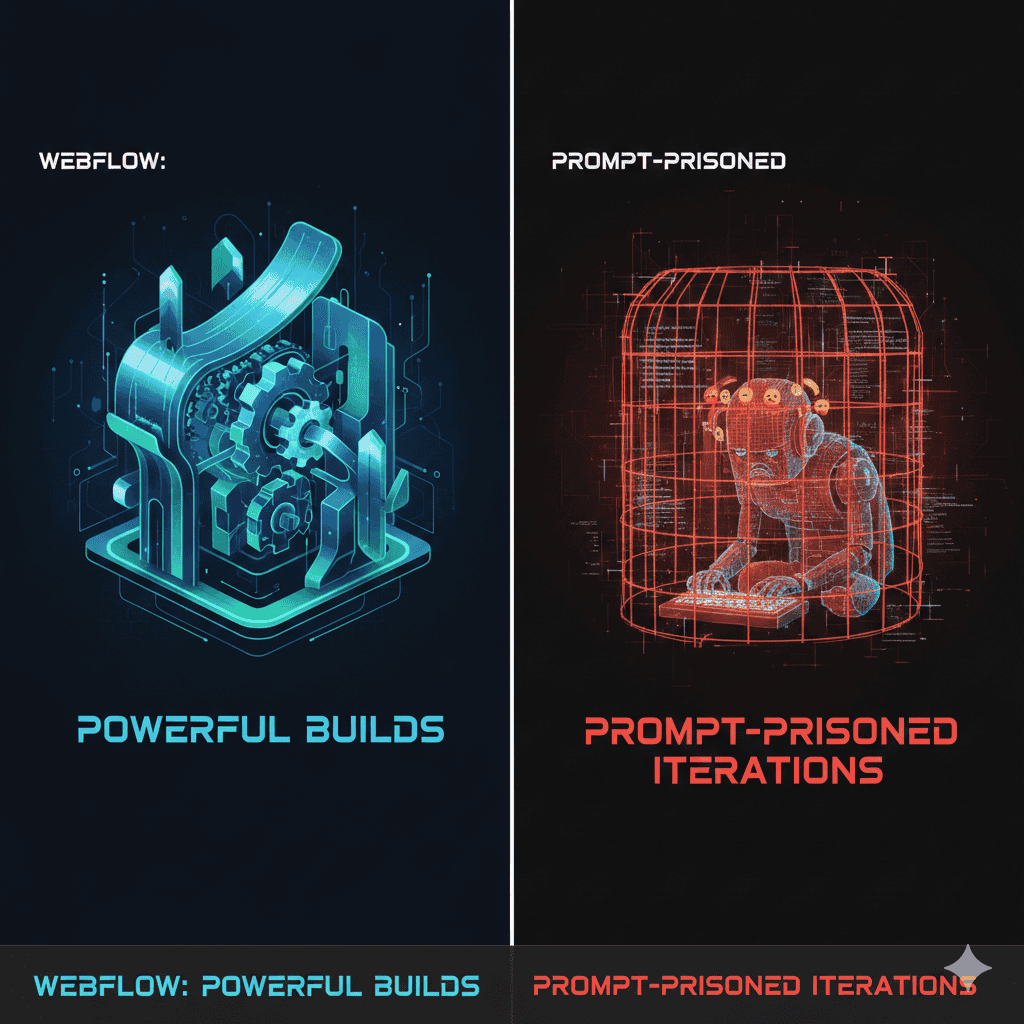
Webflow’s 2025 AI strides, via App Gen and AI Assistant, craft full-stack apps from prompts—inheriting design systems for React components, logic, and GSAP-powered animations (scroll effects, loops).
Conversational refinements pull CMS data for dynamic sites, with one-click Cloud publishes rivaling enterprise hosting. Interactions excel visually, blending micro-animations and timing controls for pro-grade motion.
Impressive, but Webflow‘s AI is a sophisticated straitjacket for fluid creators, rendering it a suboptimal grind that’s the wrong bet for endless innovation. Prompts build strong starts, but iterations silo—regenerating risks design system chaos, and animations demand visual-only tweaks (no promptable timelines for unlimited workflows).
Editing anything feels painfully technical with zero Figma-like intuitive controls, and if you hit a performance issue or technical bug, good luck—you’re on your own debugging it the hard, code-level way. Post-deploy changes? Full republishes disrupt, no native WP field auto-mapping, and widgets? Custom code exports only, with heavy lock-in—no clean downloads for migration. Backend-heavy? You’re coding again.
Flowmo AI rewrites the rules: prompt-layer GSAP-level animations via its genius AI timeline, hybrid-edit forever (live included), and automate static/WP deploys with repeater syncing. Embed prompt-crafted widgets anywhere, download all assets/code freely. Webflow suits pros enduring its barriers; Flowmo erases them, delivering portable, prompt-evolvable mastery that outpaces Webflow’s walled garden every time.